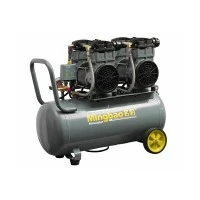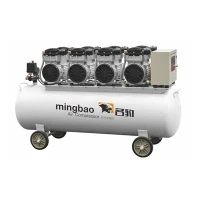

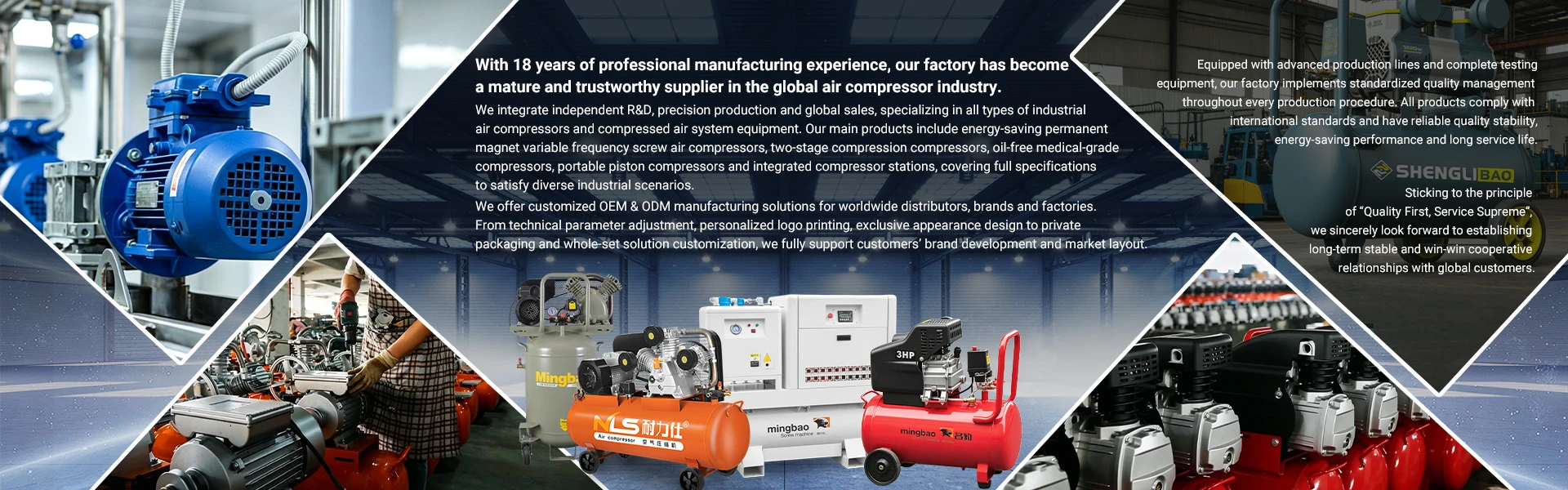
The term "oil-free machine" typically refers to an oil-free air compressor-a device designed to compress air without utilizing lubricating oil within the compression chamber itself. Through specialized structural designs and the use of self-lubricating materials, these machines enable their rotors or pistons to operate without the need for oil to facilitate sealing, lubrication, or cooling, thereby delivering significantly cleaner compressed air.
In terms of operating principle, oil-free machines rely on precision-engineered compression components to achieve direct air compression, thereby eliminating any contact between the lubricating oil and the airflow. Common configurations include oil-free scroll, oil-free screw, and oil-free piston types. While these devices still require lubrication for specific components-such as bearings-during operation, their lubrication systems are kept completely isolated from the compression chamber; consequently, they do not introduce oil contamination into the compressed air.
Given the high purity of their output air, oil-free machines are typically deployed in industries with stringent air quality requirements, such as food processing, healthcare, pharmaceuticals, and electronics manufacturing. Compared to traditional oil-lubricated air compressors, oil-free machines offer distinct advantages in terms of air purity; however, they also demand higher manufacturing precision and more rigorous maintenance, resulting in a relatively higher equipment cost.