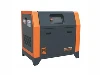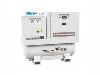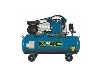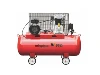

Key technical parameters serve as the fundamental basis for evaluating equipment performance and ensuring proper model selection; they directly determine the unit's air supply capacity, energy consumption levels, and suitability for specific operating conditions. Common core parameters primarily include air displacement, working pressure, motor power, rotational speed, and transmission ratio.
Air displacement, typically expressed in m³/min, is a critical metric reflecting the equipment's air supply capability, with different models corresponding to varying air output capacities. Working pressure is generally expressed in MPa or bar; common industrial models typically operate within the range of 0.6 to 1.3 MPa. Motor power determines the equipment's driving capability; theoretically, higher power enables greater air displacement, though this simultaneously results in a corresponding increase in energy consumption.
Technical parameters specific to belt-driven air compressors also include the main unit's rotational speed and transmission ratio. By adjusting the diameter of the belt pulleys, the main unit's speed can be altered, thereby enabling the regulation of air displacement to suit different operating conditions. Excessive speed may lead to increased wear and heat generation, while insufficient speed can compromise air supply efficiency; therefore, these parameters must be appropriately matched within the unit's designed operating range. Additionally, auxiliary parameters-such as noise levels, cooling methods, and energy efficiency ratings-are also crucial indicators that require comprehensive consideration during the model selection process.