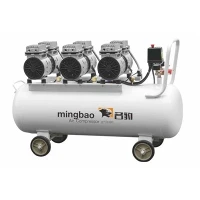

The discharge volume of a screw air compressor refers to the volume of compressed air discharged by the compressor per unit of time under specified operating conditions; it is typically expressed in cubic meters per minute (m³/min) or liters per minute (L/min). Discharge volume is a critical parameter for evaluating an air compressor's performance, as it directly determines the extent to which the equipment can satisfy a given range of air demand requirements.
Numerous factors influence the discharge volume of a screw air compressor, including motor power, main unit rotational speed, operating pressure, and the intake air environment. Under conditions of identical power output, a higher operating pressure typically results in a decrease in discharge volume. Furthermore, factors such as excessively high intake air temperatures or inadequate air filtration can compromise air intake efficiency, thereby reducing the actual discharge volume. Consequently, when selecting equipment, it is essential to configure the system appropriately by taking into account the enterprise's actual air consumption and specific operating conditions.
To ensure a stable air supply, screw air compressors typically incorporate a certain margin of excess discharge capacity; this practice serves to prevent potential reductions in the equipment's service life that could result from prolonged operation at full load. Moreover, modern air compressors often utilize variable frequency drive (VFD) technology to automatically adjust the discharge volume in response to actual air demand, thereby facilitating energy-efficient operation and enhancing the overall efficiency of the air compression system.