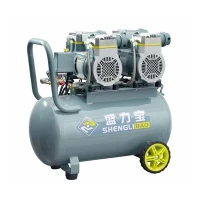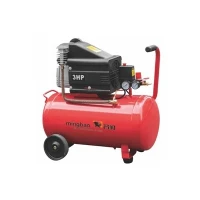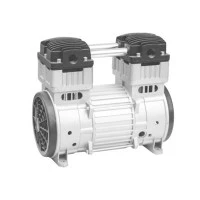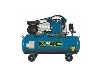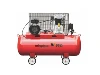

A belt-driven air compressor is a type of positive-displacement air compression device that utilizes a belt transmission mechanism to transfer power from the motor to the compressor's main unit, thereby achieving air compression. Its core characteristic lies in the use of pulleys and drive belts to connect the motor to the screw compressor unit, facilitating power transmission. Furthermore, by adjusting the specifications of the pulleys, the rotational speed of the main unit can be altered to adapt to varying air demand requirements under different operating conditions.
Structurally, a belt-driven air compressor primarily consists of a motor, a belt transmission system, a screw compressor unit, a lubrication and cooling system, and a control system. Among these components, the belt transmission system serves as the key distinguishing feature compared to direct-drive air compressors; it not only fulfills the function of power transmission but also provides a certain degree of cushioning, which helps to mitigate startup shock and enhance operational stability. Belt-driven air compressors are predominantly employed in small to medium-scale industrial settings-such as mechanical maintenance workshops, spray painting operations, and woodworking facilities. Given their relatively lower cost and straightforward maintenance requirements, they retain significant practical value in applications where energy efficiency standards are not exceptionally stringent.