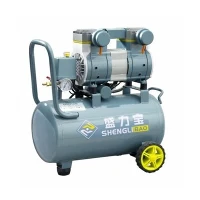

In terms of structural design, oil-free compressors prioritize precision fitting and material optimization. By utilizing self-lubricating materials, specialized coatings, and high-precision machining processes, they effectively replace the role of traditional lubricating oil within the compression chamber, thereby achieving low-friction and low-wear operation. Furthermore, the complete isolation of the lubrication system from the compression system constitutes a key design principle, serving to eliminate any risk of oil contamination.
Regarding overall system design, oil-free compressors place a greater emphasis on stability and ease of maintenance. Through a modular structural layout, components-such as the motor, compressor host, cooling system, and control system-are logically compartmentalized to enhance both heat dissipation and maintenance efficiency. Moreover, driven by advancements in energy conservation and intelligent technology, oil-free compressors are increasingly incorporating variable-frequency control and intelligent monitoring systems. This enables the equipment to achieve superior energy efficiency and operational reliability while simultaneously guaranteeing a clean air output. This design philosophy allows these compressors to meet the stringent air quality requirements of specialized industrial applications, while also reducing the burden on downstream air purification systems.