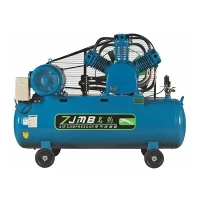

Belt-driven air compressors transmit the rotational power from an electric motor to the compressor's compression components via a belt drive mechanism, thereby facilitating the compression and storage of air. This method of power transmission offers several advantages-including a simple structure, smooth operation, and ease of maintenance-which have led to the widespread adoption of belt-driven air compressors across numerous industries.
From a technical standpoint, a belt-driven air compressor primarily consists of an electric motor, a belt transmission system, compression components, a cooling system, and a control system. Acting as the power source, the electric motor transmits power to the compression components via the belt, driving them to compress the air. The compression components typically utilize either a screw-type or piston-type design, capable of efficiently compressing air to the required pressure level. The cooling system is responsible for dissipating heat generated during the compression process, ensuring that the equipment maintains stable performance during prolonged periods of operation. Finally, the control system serves to monitor and regulate the equipment's operational status, thereby guaranteeing its safe and efficient performance.